

Why Texture Matters in UV Disinfection
September 2024
In UV disinfection, the surface texture is a crucial factor that determines how effective the process will be. The latest Performance Standard for Healthcare UV Germicidal Light Whole-Room Surface Disinfection requires that devices be tested against germs on a variety of surfaces like polycarbonate, stainless steel, floor vinyl, furniture vinyl, and Formica. These materials are specifically chosen because they are a high-fidelity representation of the real-world surfaces found in hospitals, and the real-world challenge lies in their texture.
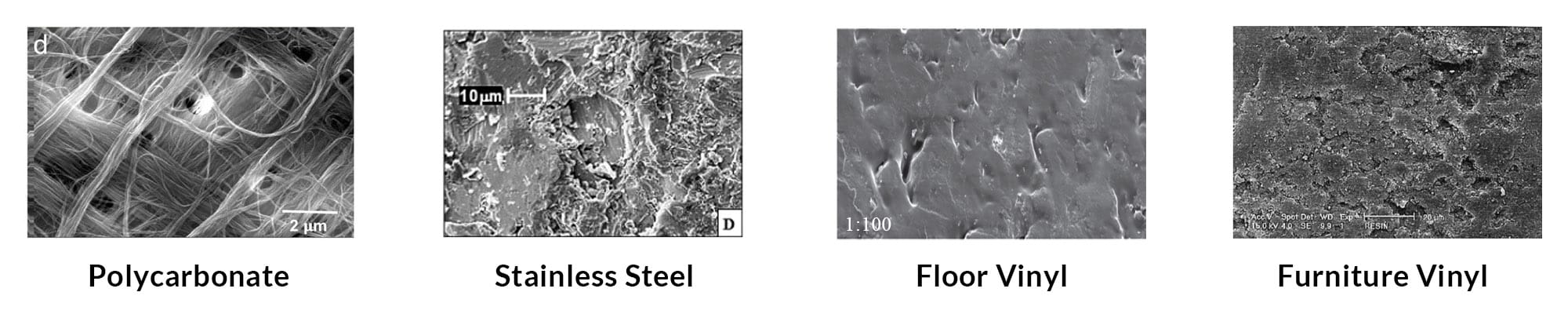
Even the smallest textures on these surfaces can create what’s known as the “canyon wall” effect. Just as the walls of a canyon cast shadows, the microscopic ridges and valleys in a textured surface can block UV light from reaching the bottom, where bacteria and viruses can hide. This makes it difficult for traditional vertical UV lamps to deliver consistent disinfection. When a UV lamp is positioned vertically above a textured horizontal surface, its light struggles to penetrate these micro-canyons, leaving the “canyon floor” and its hidden pathogens untouched by light.
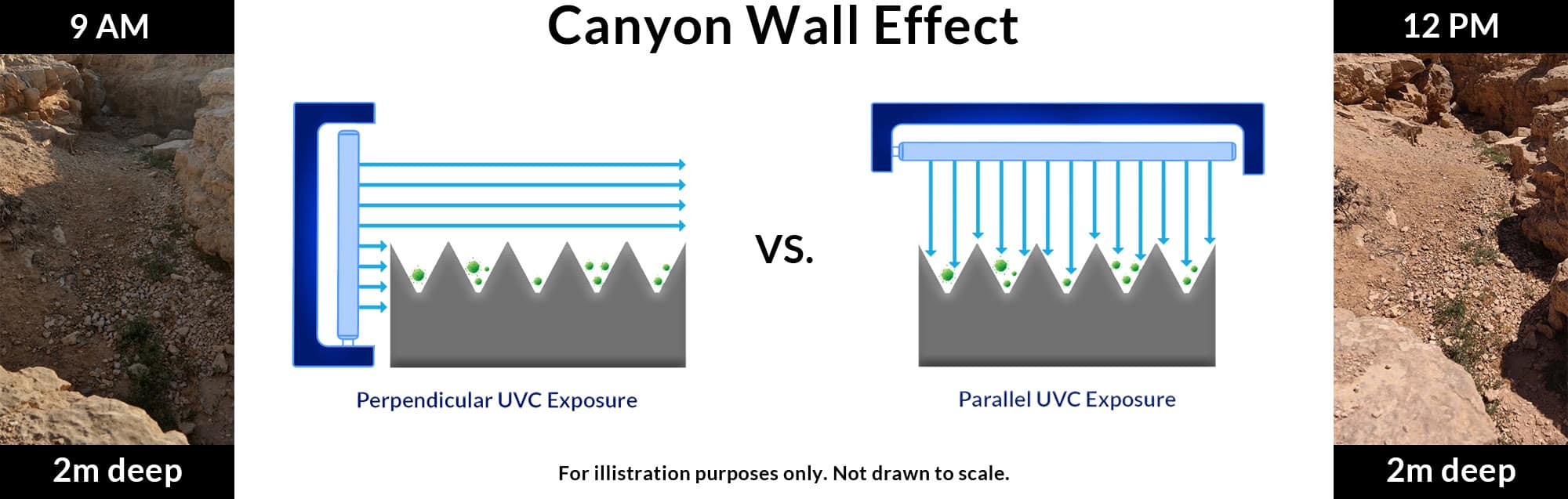
The canyon photographed is only 2m deep. Typical surface texture is about 0.8-1.5mm deep. Infectious pathogens are only about 1 micron which makes a 1mm canyon proportional to a 5500-feet deep canyon. Exposing the surface from a perpendicular angle of incidence (12PM) means a more effective exposure to a textured surface.
This is why the new testing standard is so important. It ensures that UV disinfection devices are tested in conditions that reflect the challenges of real hospital environments. The goal is to provide end users with results that are not only accurate but also practical and actionable. If a device can effectively disinfect these textured surfaces during testing, it’s more likely to perform well in the field.
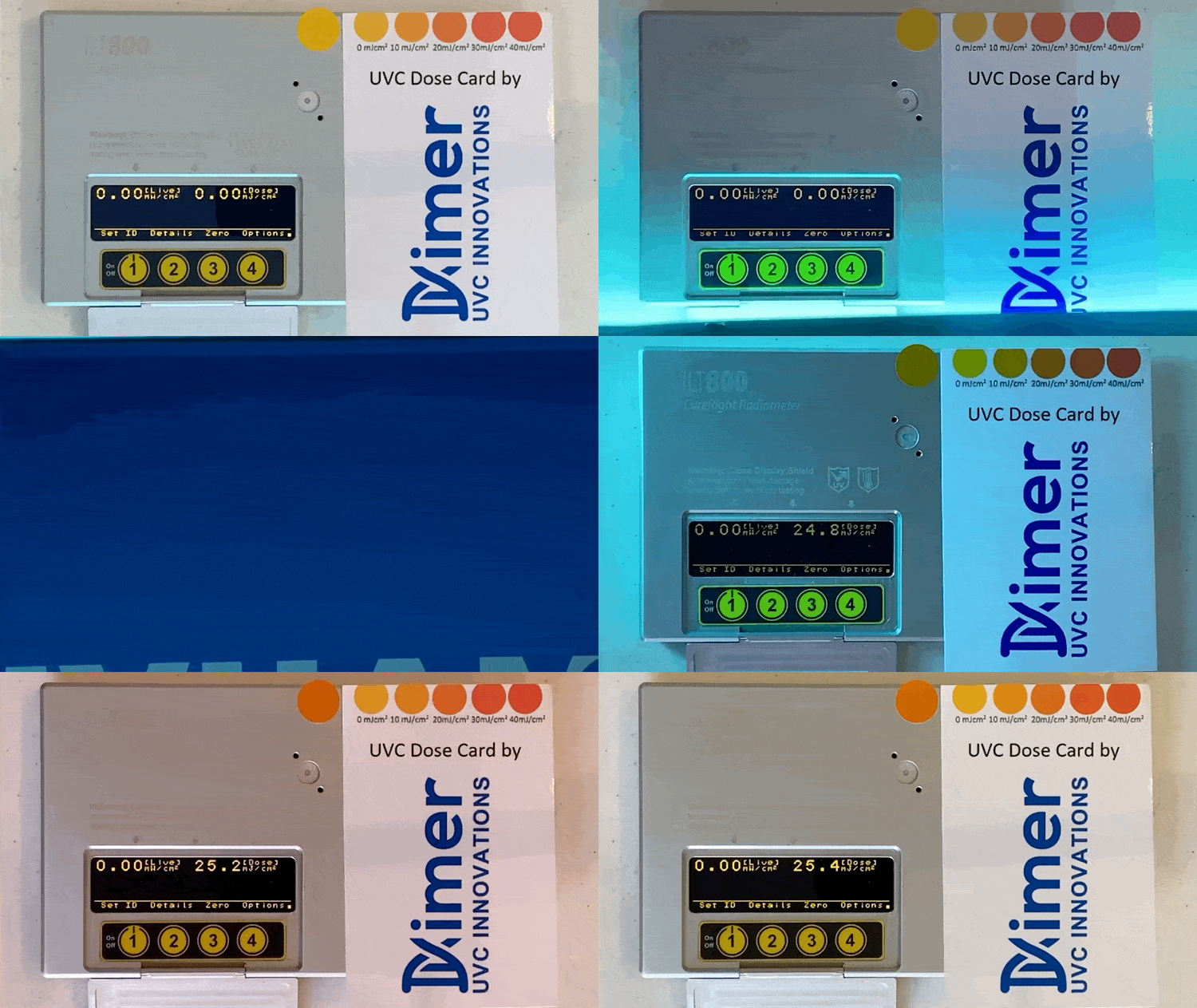
The new ANSI performance standard is unique in its focus on high fidelity. It tests the efficacy of UV surface disinfection devices against real-world pathogens on the same surfaces they’d typically be found—factoring in not only the microscopic texture but also the angles, orientations, and positions of real-life settings. As we discussed in our April column, while common testing methods using photochromic indicators and electronic meters may be convenient, they cannot account for the “canyon wall effect” or surface texture.
The UVHammer is designed with this challenge in mind. By allowing operators to control the height and angle of the UV lamps, the UVHammer can always align its light parallel to the surface, eliminating shadows and ensuring that every part of the surface—including those harder-to-reach micro-canyons—receives a consistent and effective germicidal dose. This approach ensures thorough disinfection, leaving no place for harmful pathogens to hide.